Technology and digital innovation at the service of Arts and Culture
XYZ Atelier Inc. is aimed at professionals in design, architecture, digital creation and cultural institutions.
Modelling & reality capture from object to territory
His approach also extends to immersive creation, projection and augmented reality projects where the precision of the various reality capture technologies is often complementary and generates raw data that becomes narrative vectors.
The Atelier works in a spirit of co-creation, collaboration and innovation
with various stakeholders and organizations from the Arts and Culture sectors,
of Design and Architecture.
We are at your service and we adapt to the different needs of projects and the constraints encountered, whether temporal or material.
- Reality capture from object to territory
- Technology: Lidar, Metrology, Photogrammetry
- Creation of digital twins
- Architectural 3D surveys (production of floor plans, sections, and elevations)
- Digital models (Rhino) and physical models (3D printing, CNC cutting)
- Architectural Illustrations & Renders (V-Ray, D5 Render, ComifyUI, Nano Banana)
- Rhino, D5 Render, and other software training, private or group
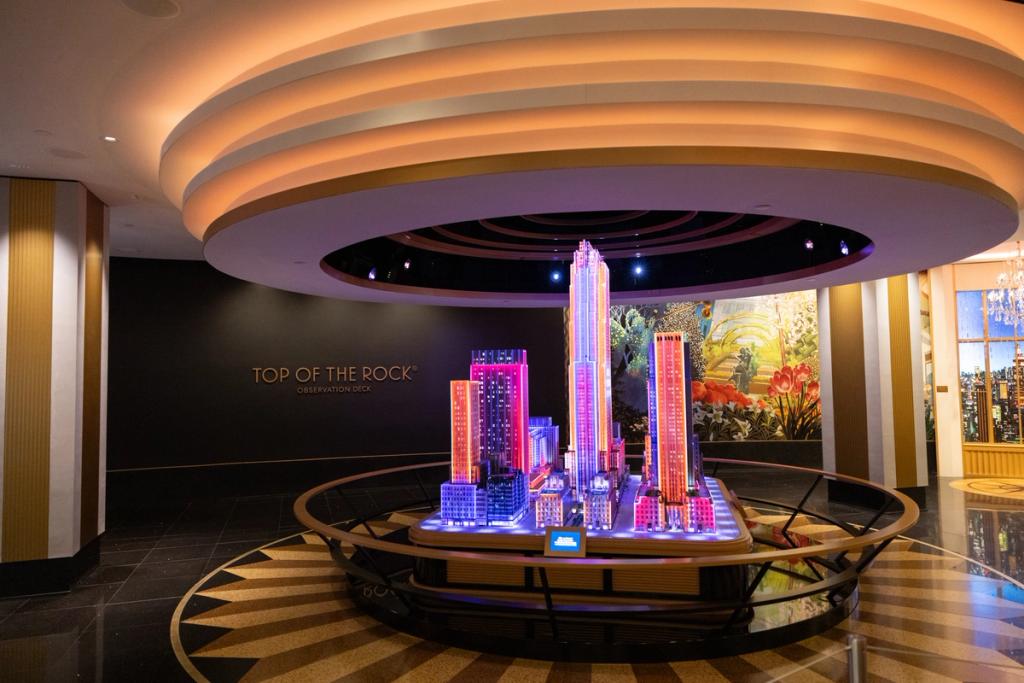
Rockefeller Center - 2024
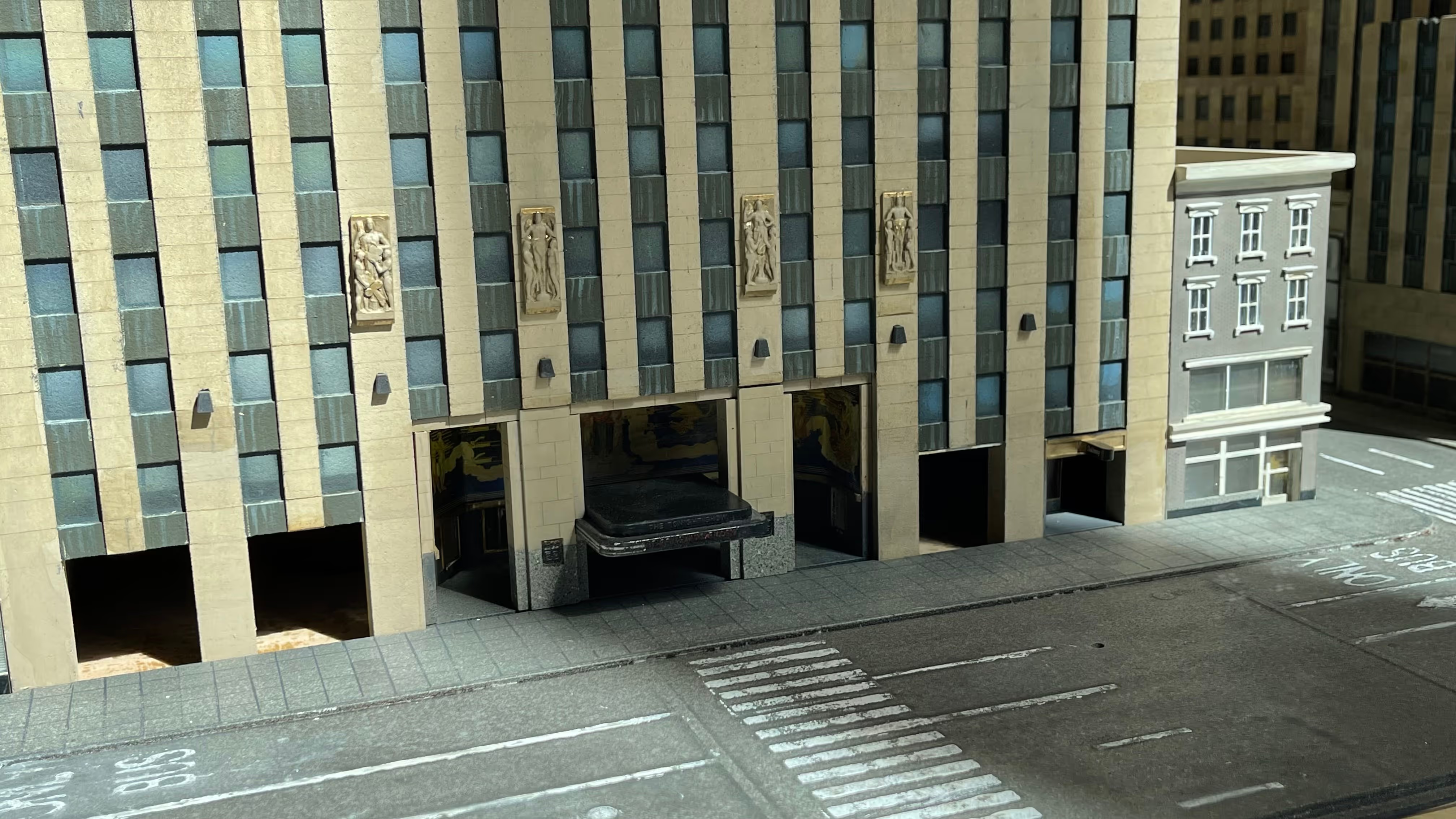
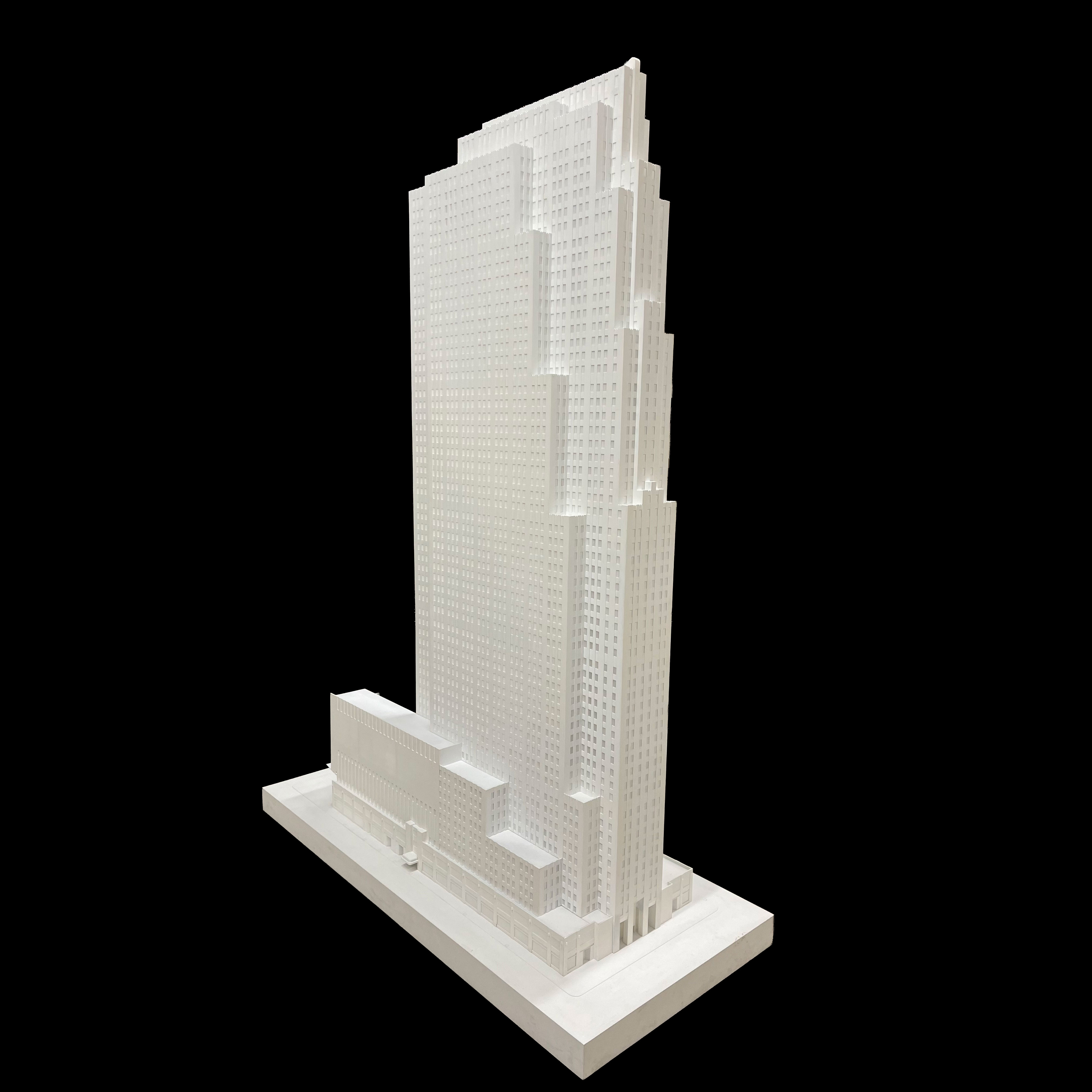
Realization of a set of architectural models representing the entire Rockefeller Center complex in New York on which is projected an immersive scenography about its rich history. The projection not only illuminates the object; it tells a story through the seasons, architecture and moments of glory of the center, creating a captivating atmosphere reinforced by sound and visual elements, we speak of a sensory narration. The model of the architectural ensemble is currently on display at the Top of the Rock Welcome Gallery, Rockefeller Center, New York.
The work of XYZ Atelier was to model the various models of the architectural ensemble, to prepare the CNC files for laser cutting and engraving as well as to carry out the metrological scans in order to create a faithful digital twin. This allowed us to validate the existing deviations between the virtual and physical model and to transmit to the creators of immersive content all the information necessary to create projections on the architectural model.
A collaboration with Cadmium Scénique, Mirari, Après Minuit and The Hetema Group.
A link to The Hetema Group
https://thgcreative.com/thg-gallery/top-of-the-rock/
A link to the Top of the Rock tour, New York
https://www.rockefellercenter.com/fr-fr/attractions/plateforme-observation-top-of-the-rock/
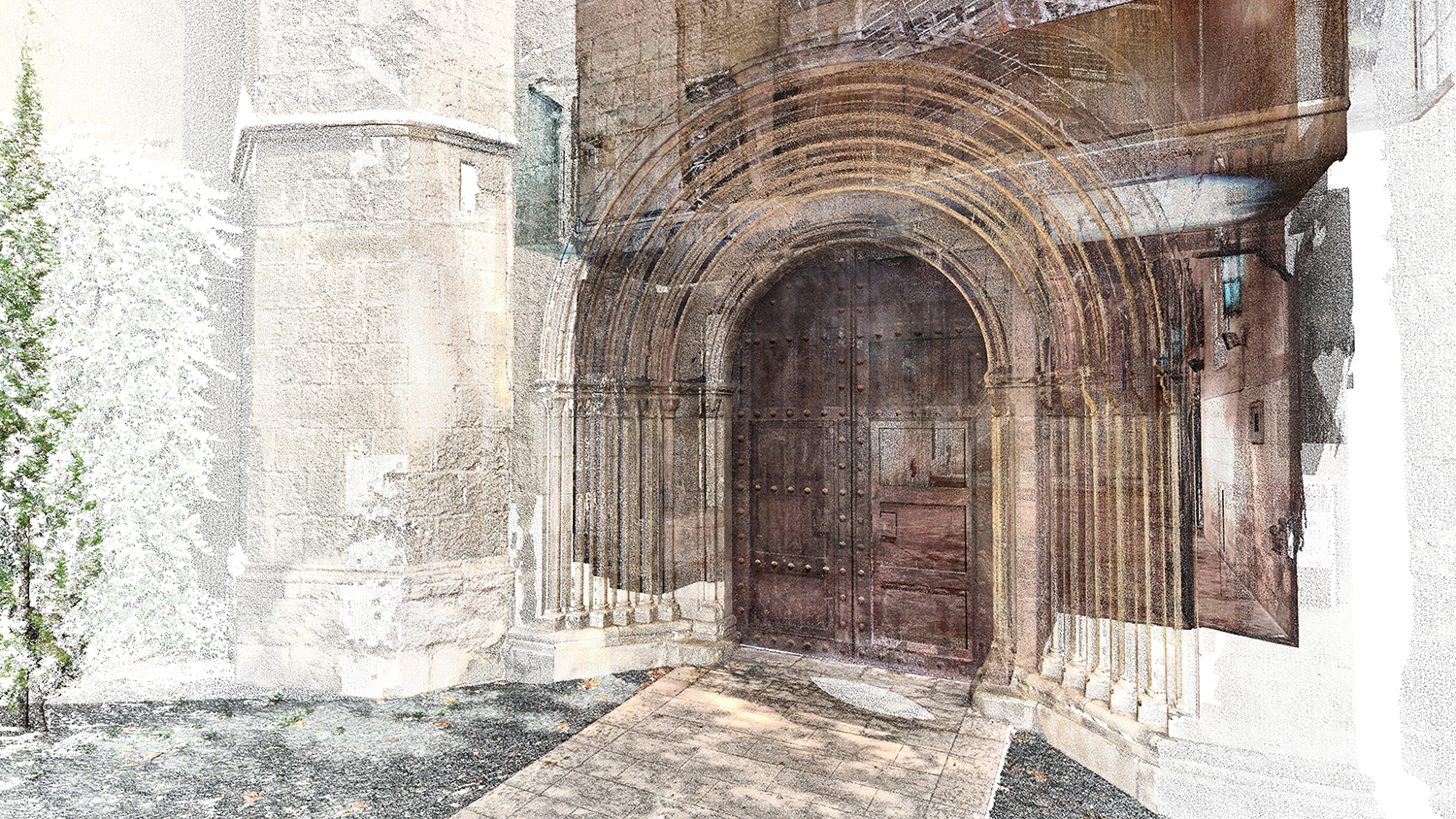
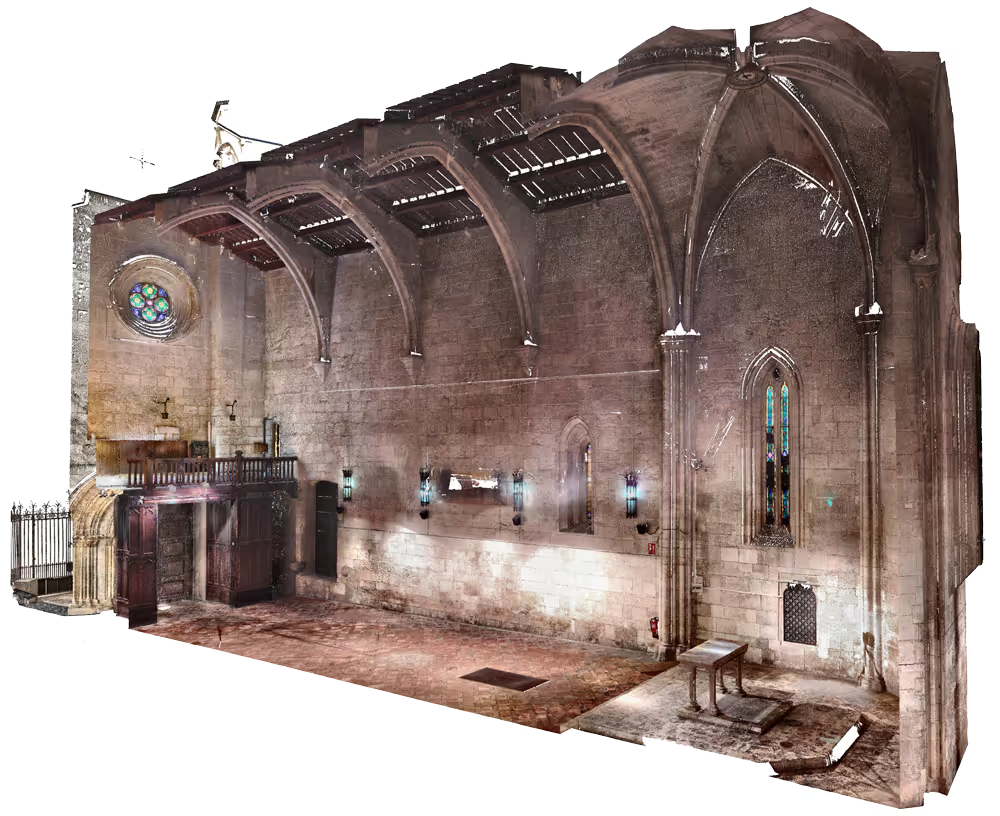
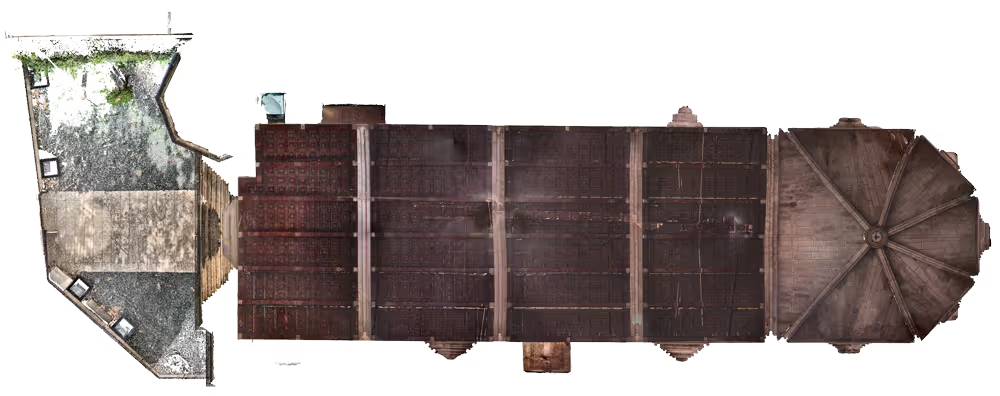
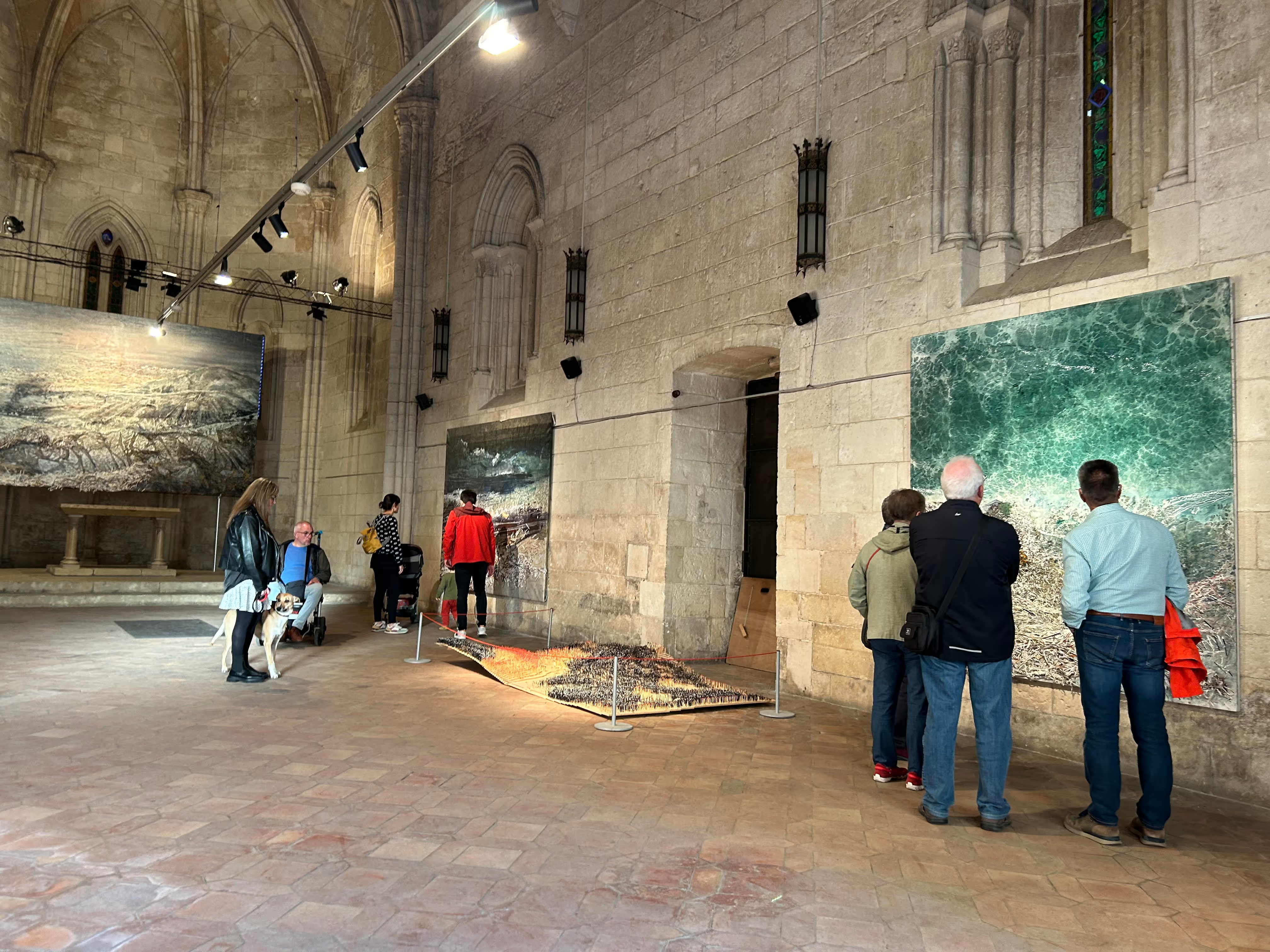
Capella Sant Joan - Vilafranca del Penedès - Catalunya - 2022
Heritage modeling carried out as part of the Hybris & Nemesis exhibition under the theme of the Anthropocene in collaboration with the Department of Culture of the Ajuntament Vilafranca del Penedès, Sílvia Amigó Cuscó and Francesc Esteve, technical director of the Capella Sant Joan.
The Capella Sant Joan is a magnificent chapel of late Catalan Romanesque with mainly Gothic elements. The foundation of Saint John’s Chapel dates to 1307, built by the Order of the Hospitallers of Saint John of Jerusalem established during the medieval period in Vilafranca del Penedès, Catalunya. In 1583, the bell tower was built. In 1887, August Font i Carreras created the grille placed in front of the entrance door, according to a project preserved in the municipal archives.
In 1929, the building was restored and modified under the direction of the architect Jeroni Martorell. During the works, the semi-hemispherical brick dome, built in 1583, was replaced by a new bell tower with eight openings and the bell gable was demolished. During the Civil War of 1936, the building was used as a food warehouse. Although it was reconsecrated in June 1944, the chapel was subsequently closed to worship and has since been used as a multifunctional hall hosting concerts and exhibitions.
Vilafranca is a small town south of Barcelona that is very lively; the inhabitants are very interested in culture and, every day, there is a public market on Plaça Sant Joan right next to the chapel.
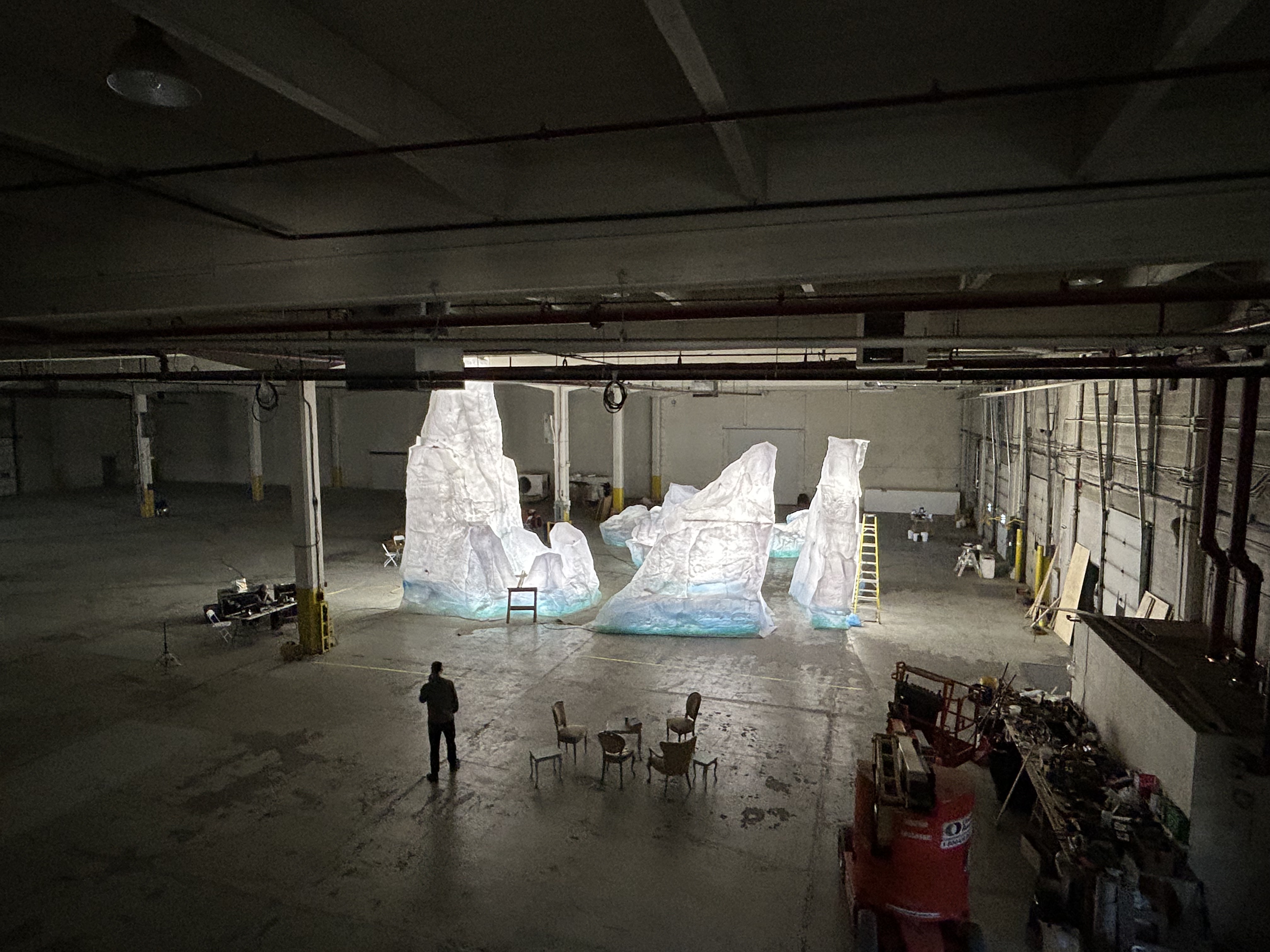
OSAKA - 2025 World Expo
3D modeling of icebergs and optimization for construction at the planning stage. The Icebergs were made of polycarbonate by the Cadmium Scénique team.
The next step was the production of positioning scans to visualize the scenographic project, create digital twins for the Mirari Studio team and After Midnight, plan various modifications to be made in the workshop, installation and transport to Osaka on the site of the 2025 World Expo.
The final digital twins were produced directly in OSAKA using photogrammetry in order to be as faithful as possible to the constructed object. The choice of photogrammetry was made for technical reasons specific to the materials and their physical qualities.
The challenge was to get a digital object (MESH) that was clean, without too much noise (lost spots). The Icebergs were made of polycarbonate and were backlit.
A collaboration with Cadmium Scénique, Mirari Studio, Après Minuit & JKFL as well as Robert Lepage.
A link to the Making-of: the Canada Pavilion Experience at Expo 2025 Osaka.
https://www.youtube.com/watch?v=N9iuuwsrB50
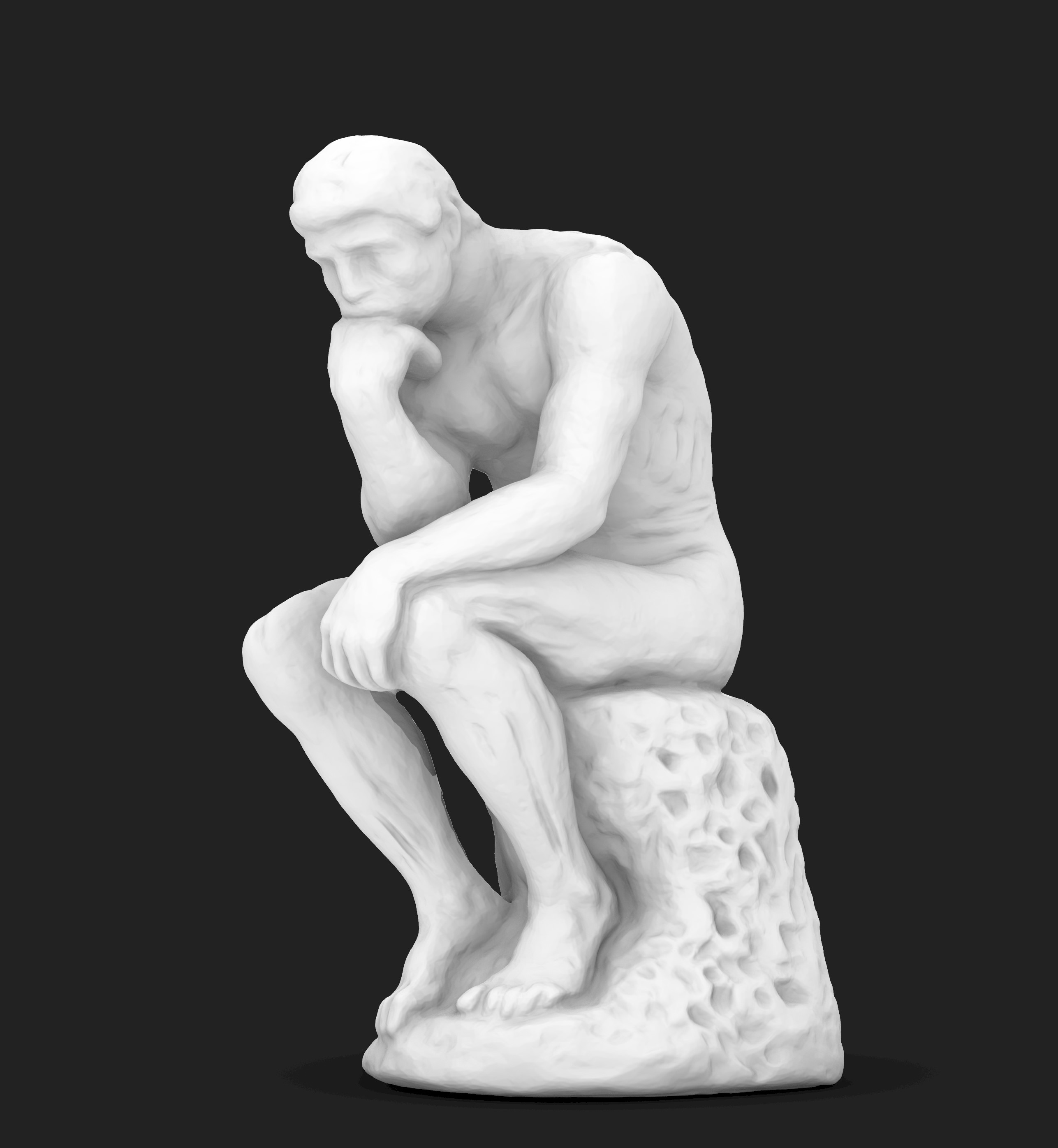
Metrology
In the field of culture and the arts
Why use a metrological scanner in this context? Because it offers an unparalleled level of precision, much higher than that of conventional 3D scanners. This makes it possible to maintain the fine details, reliefs and volumes, including on fragile objects or objects of great historical value. Thanks to their micrometric precision, metrological scanners make it possible to digitize works of art, sculptures, artifacts or architectural elements with fidelity, without contact or alterations.
Applications:
- Digital archiving: creating high-resolution digital twins for documentation, research, and preservation
- 3D printing and restoration: assistance in the reconstruction or faithful reproduction of damaged elements thanks to exact geometry
- Useful for creating virtual exhibitions and augmented reality
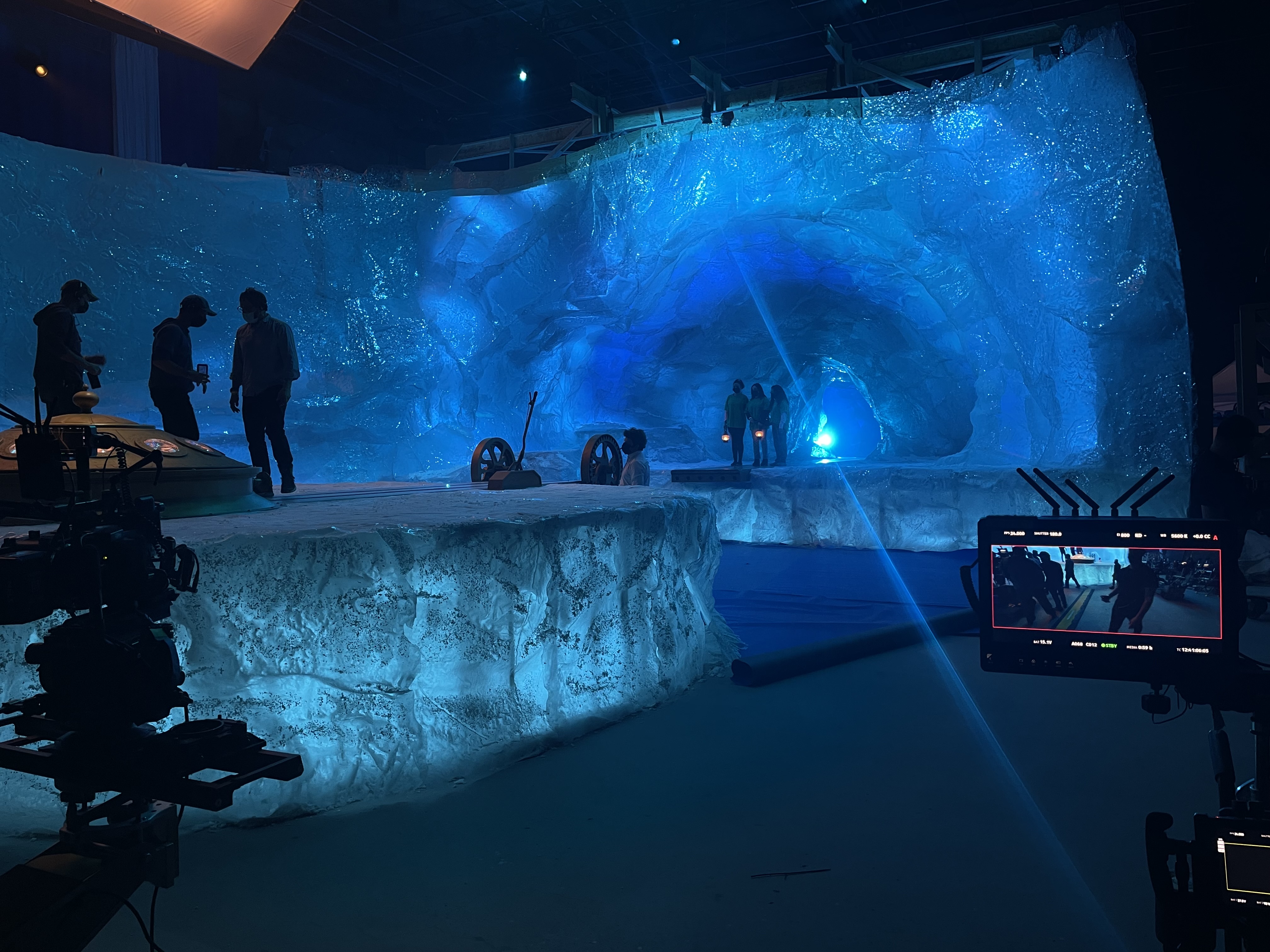
Project - The Naughty Nine
Camium Scénique built a polycarbonate tunnel for an American production shot in Montreal at Mel's studios. The role of XYZ Atelier was to perform several scans of the tunnel in order to provide them with an object (MESH) for post-production.
The work of the workshop was therefore to produce a point cloud from the scans carried out, to assemble them, to clean them and to create a MESH from the unified point cloud. Deliverables: a folder containing OBJ, PLY, Blend and 3DR files. We could also have provided a unified point cloud in E57 format.
The cleaning and assembly of the scan stations have been carried out through Leica Geosystem's Cyclone applications from the large Hexagon family. Register 360 and 3DR for spot cleaning. The final mesh was produced via Métashape but it is also possible to create it directly in 3DR.
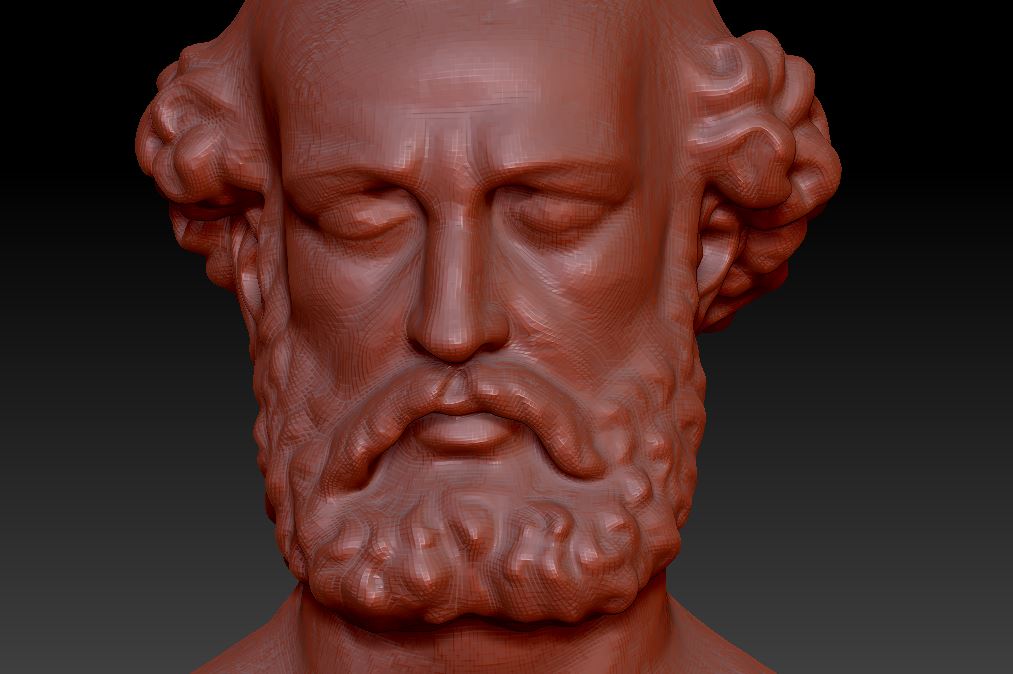
CNC
Working with CNC in the fields of design, events and culture offers numerous advantages in terms of precision, creativity and personalization. In design, CNC makes it possible to produce complex parts with millimeter precision, which is essential for the production of prototypes or the creation of custom objects, while optimizing manufacturing time. This technology also allows great flexibility in the choice of materials, ranging from wood to metal, plastic or even composite materials, thus offering a wide range of creative possibilities.
The CNC is transforming the way ephemeral installations are designed and built. Whether for immersive decorations, custom stands or interactive sculptures, CNC makes it possible to create impressive visual elements, while ensuring great reproducibility and rapid assembly. This makes it possible to meet specific aesthetic and technical requirements while respecting budget and time constraints.
In the field of culture, the CNC opens up new possibilities for artists and cultural institutions. It makes it possible to produce sculptures, installations or art objects with unprecedented precision, often at scales larger than what was possible by hand. In addition, it facilitates the restoration of ancient objects, by making it possible to reproduce pieces with incredible fidelity, or even the creation of replicas for exhibitions. CNC is definitely a powerful, versatile tool.
Preparing files for CNC is an integral part of our services.
Work carried out in collaboration with François Brochu from A&R Brochu Construction. All credit for the CNC cutting work on the OSAKA project goes to them.However, CNC file preparation is an integral part of our services, and we work closely with A&R Brochu Construction, relying on their extensive expertise in the field.
www.arbrochu.ca/fr/usinage-cnc ttps://arbrochu.ca/fr/usinage-cnc/
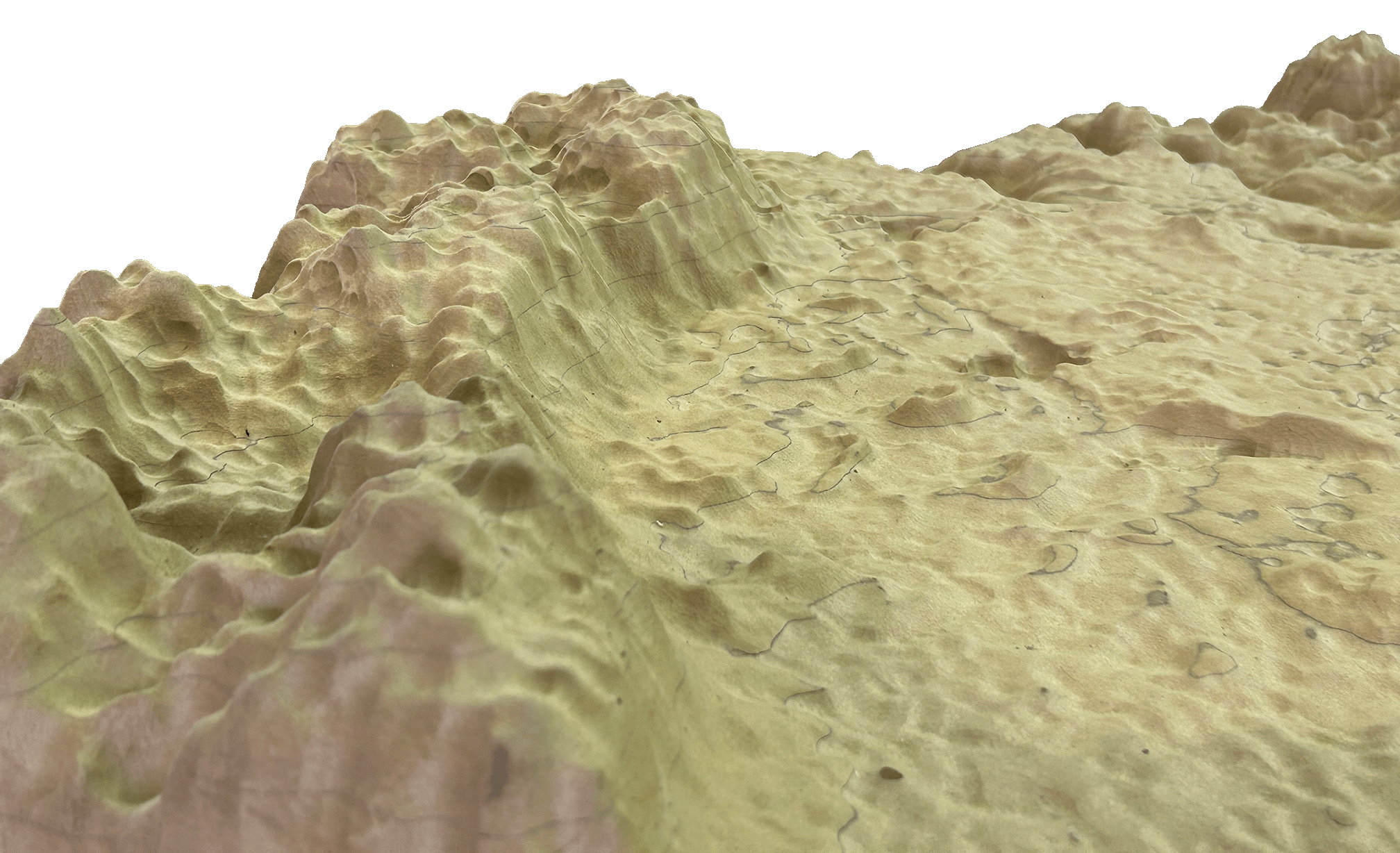
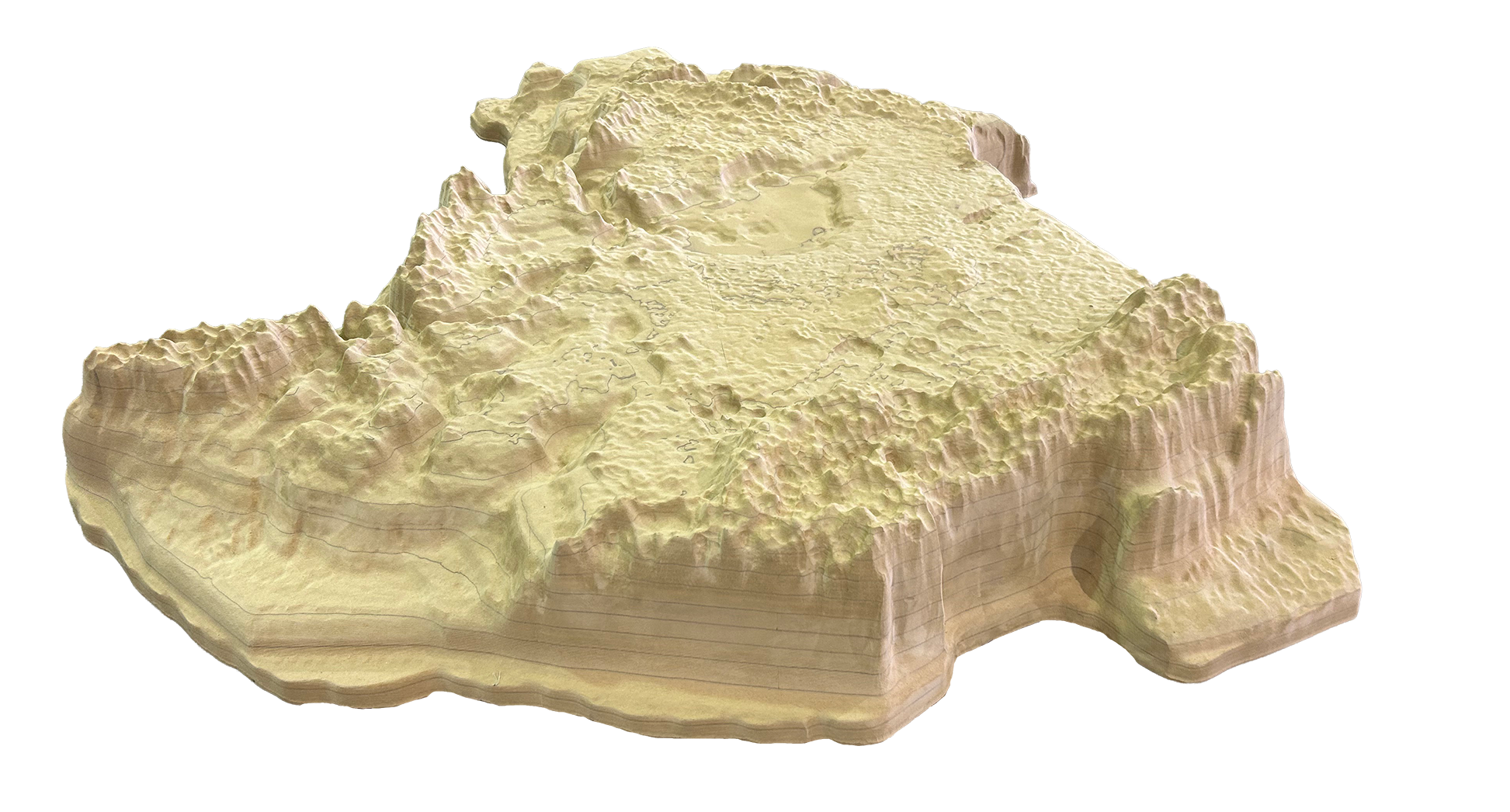
Technology and digital innovation at the service of Arts and Culture
The various technologies generate raw data that become both narrative vectors for your projects, but also reference data for construction, revaluation, and 3D printing.
When LIDAR and metrology meet: an alliance at the service of arts, culture, architecture and design. Reality capture technologies now offer new ways of documenting our environment: from object to territory. Among them, the LIDAR scanner and the metrological scanner stand out for their complementarity. LIDAR (Light Detection and Ranging) makes it possible to quickly identify entire spaces — buildings, heritage sites, land — by recording millions of points that restore the geometry of the place.
The metrological scanner, on the other hand, focuses on fine detail. Designed for micrometer-accurate measurements, it is ideal for creating digital twins of architectural ornaments, sculpted objects and elements, assemblies, and other artifacts. This technological hybridization meets the needs of architects, curators, scenographers and designers, creating digital twins that are both faithful and accurate. Reality capture is also used to analyze deviations between design projects and built projects.
Reality capture technologies are essential to then work in augmented reality, immersive experience, projection on a building, in catering as well.
A world of endless possibilities is opening up before us!
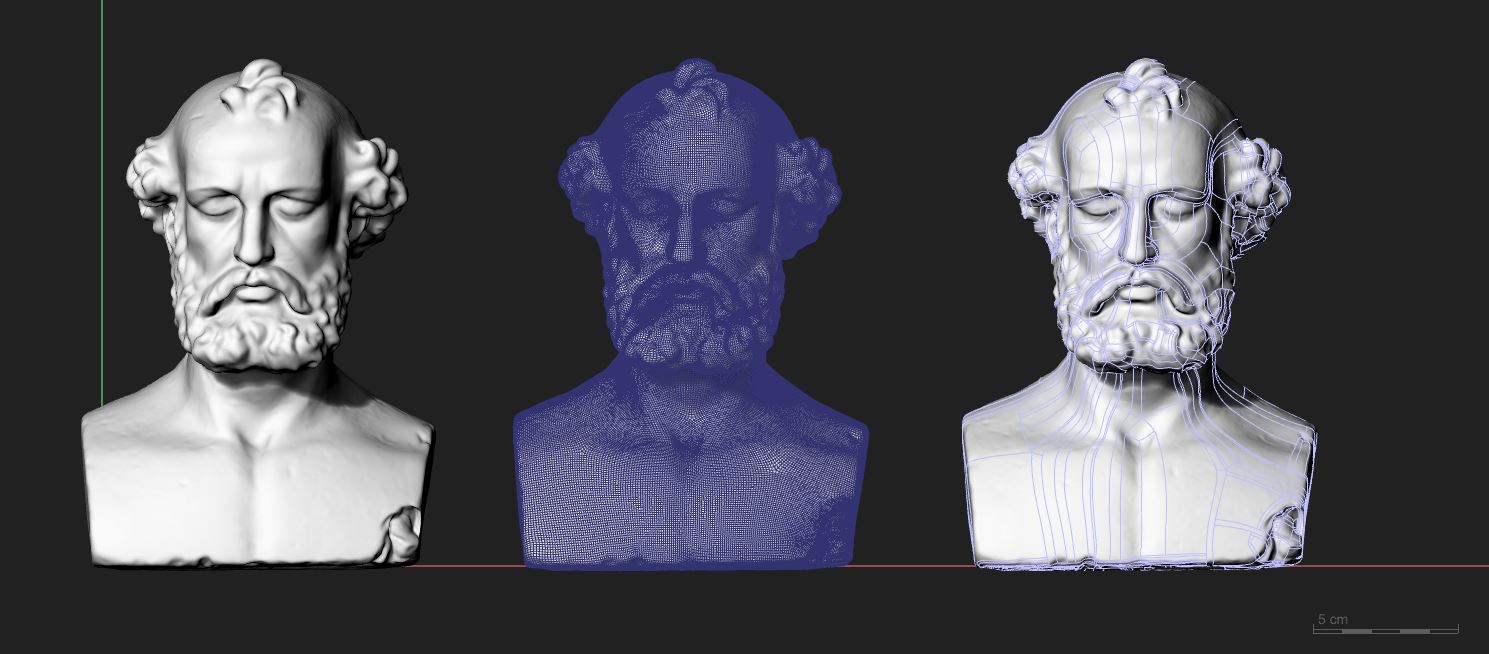
Data Processing, Point Cloud Optimization, Meshing, and Reverse Engineering (NURBS)
We can provide raw data (point cloud) as well as a surface digital twin (mesh). It is also possible to reconstruct surfaces and objects into vector surfaces (NURBS). Whether for 3D printing or the preparation of documents used for CNC cutting or laser cutting, we provide a deliverable corresponding to your needs.
A point cloud is a set of points representing the surface of an object, building, or land. Each point has its own XYZ coordinate and additional information, such as color. The point cloud is the raw data from the scan, however, in metrology, it is possible to create a mesh directly at the time of reality capture.
Combining photogrammetry, LIDAR and metrology as required, we guarantee micrometric precision at the object level and reliable digital documentation to transmit the captured information (architectural and topographic spaces).
Whether in design, architecture, digital creation and cultural institutions, the point cloud is used as a basis for creating surface models (meshes) commonly called digital twins. Point clouds are also used to extract plans and sections for architectural spaces. Once a digital twin is in hand, it is possible to reconstruct architectural surfaces or an object in NURBS, this is also possible from point clouds depending on the preferred work path.
What does reality capture and data processing look like?
Acquisition and import
LIDAR sensors and metrological scanners produce point clouds: millions or even billions of X, Y, Z coordinates representing the geometry of the scanned surface. This data is imported into specialized software. However, in metrology, it is now possible to create the mesh simultaneously with reality capture.
Cleaning and optimization
Raw data often contains noise: wrong points, duplicates, artifacts. These unwanted points are cleaned and removed to obtain a clean and coherent cloud.
Scan station alignment and register
If several scan stations have been created, the various point clouds must be assembled to reconstruct a complete model. This is done by recalibration (register), aligning each station in relation to each other, in all axes in order to obtain a precise result using targets, landmarks or self-alignment algorithms.
Fusion and optimization
Once aligned, point clouds can be merged to create a unified model. We optimize the density, we reduce superposition errors, we homogenize the surfaces.
Segmentation and modeling
Depending on the needs of the project, the point cloud can be:
- Grouped by areas or objects (wall, floor, sculpture, facade...)
- Converted to mesh (MESH)
- Transformed into vector surfaces (NURBS)
- Plans, sections and elevations can be extracted
- Transformed into digital twins or digital mockups
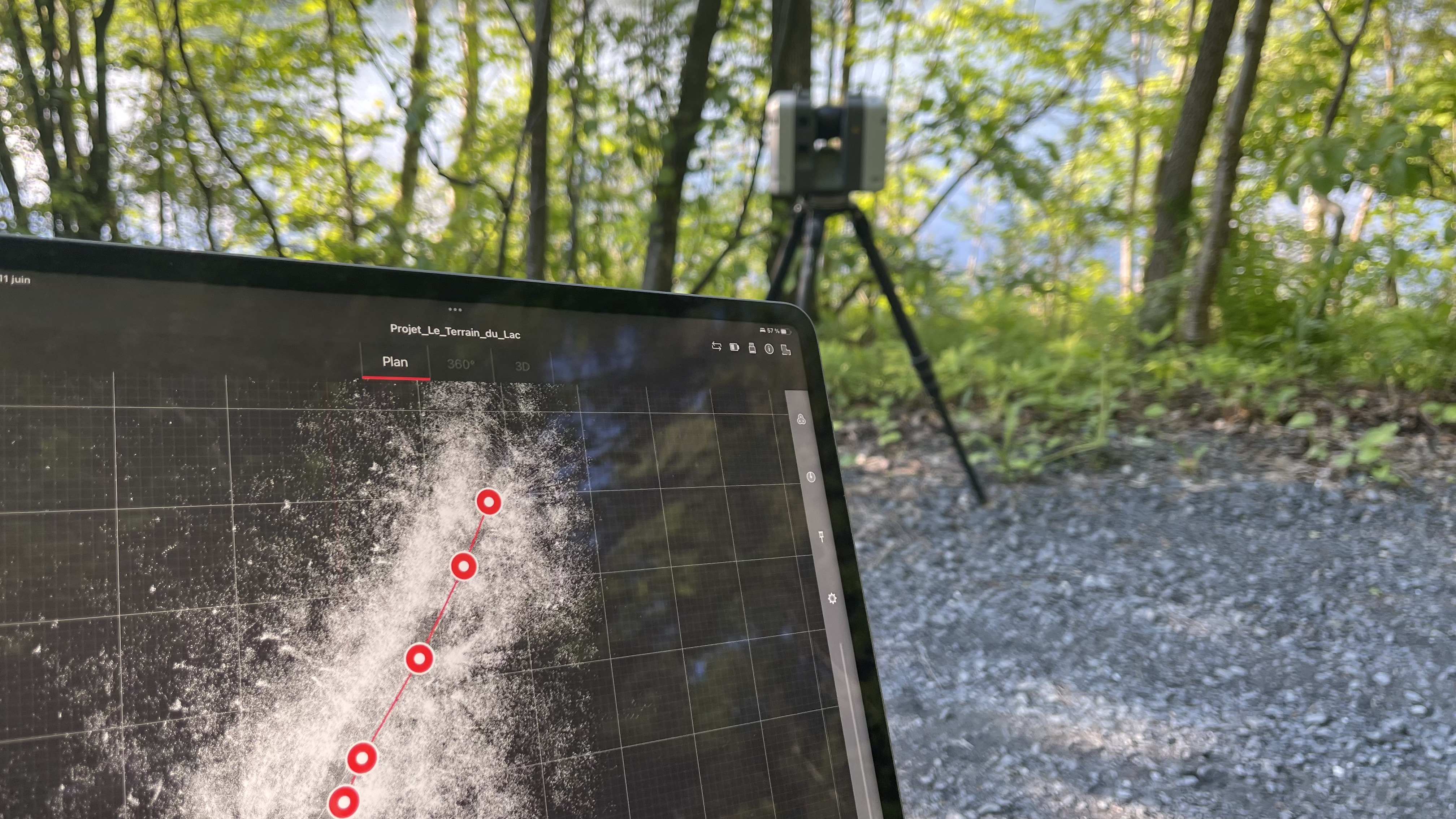
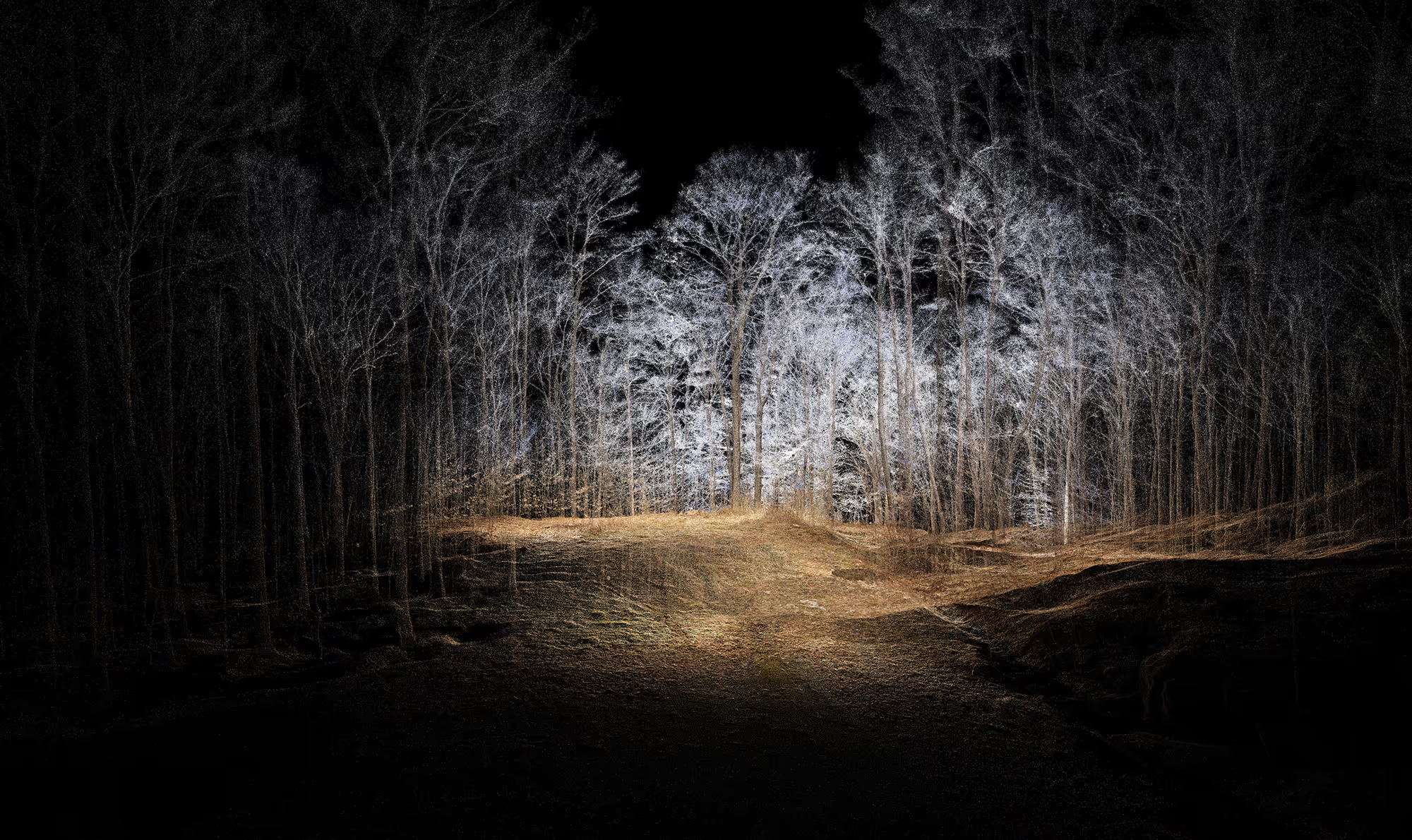
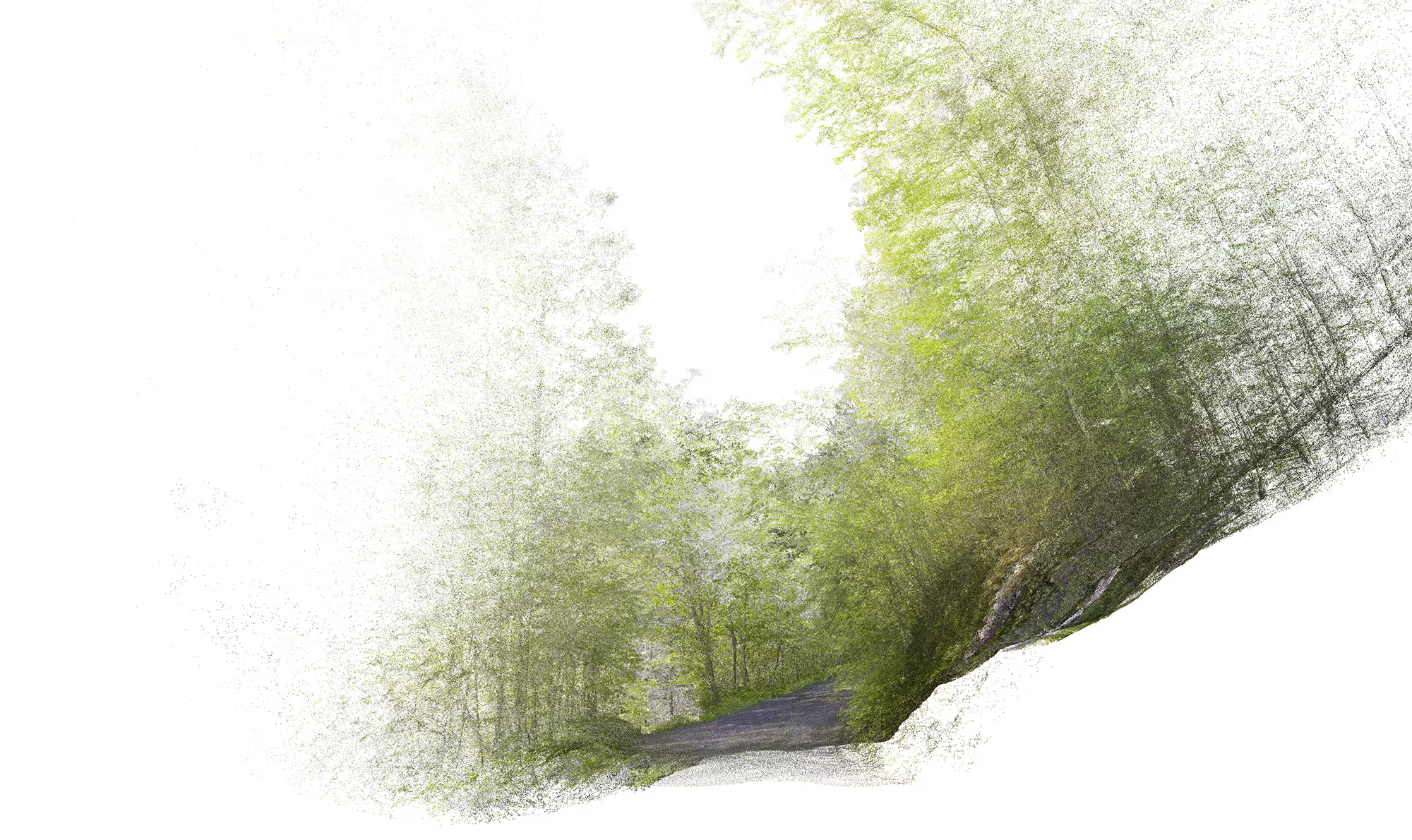
Reality capture from object to territory
Technology — Lidar, Metrology, Photogrammetry
We create a highly accurate reality capture, adapted to all scales — from the object to the territory. We work with different scanning technologies, adapting to the needs of each project that is entrusted to us.
Deviation analysis, augmented reality, immersive experiences, museum and event installations
The raw data obtained by reality capture also gives us the possibility of analyzing the deviation between the designed and the built; whether at the scale of an architectural model for an exhibition and projection project, immersive experiences or augmented reality projects as well as for architectural projects.
Reality capture obviously makes it possible to create digital twins that are useful for the projects carried out by our digital creators. There are an infinity of possibilities that are deployed during the realization of a project. We adapt by constantly looking for innovative and creative solutions.
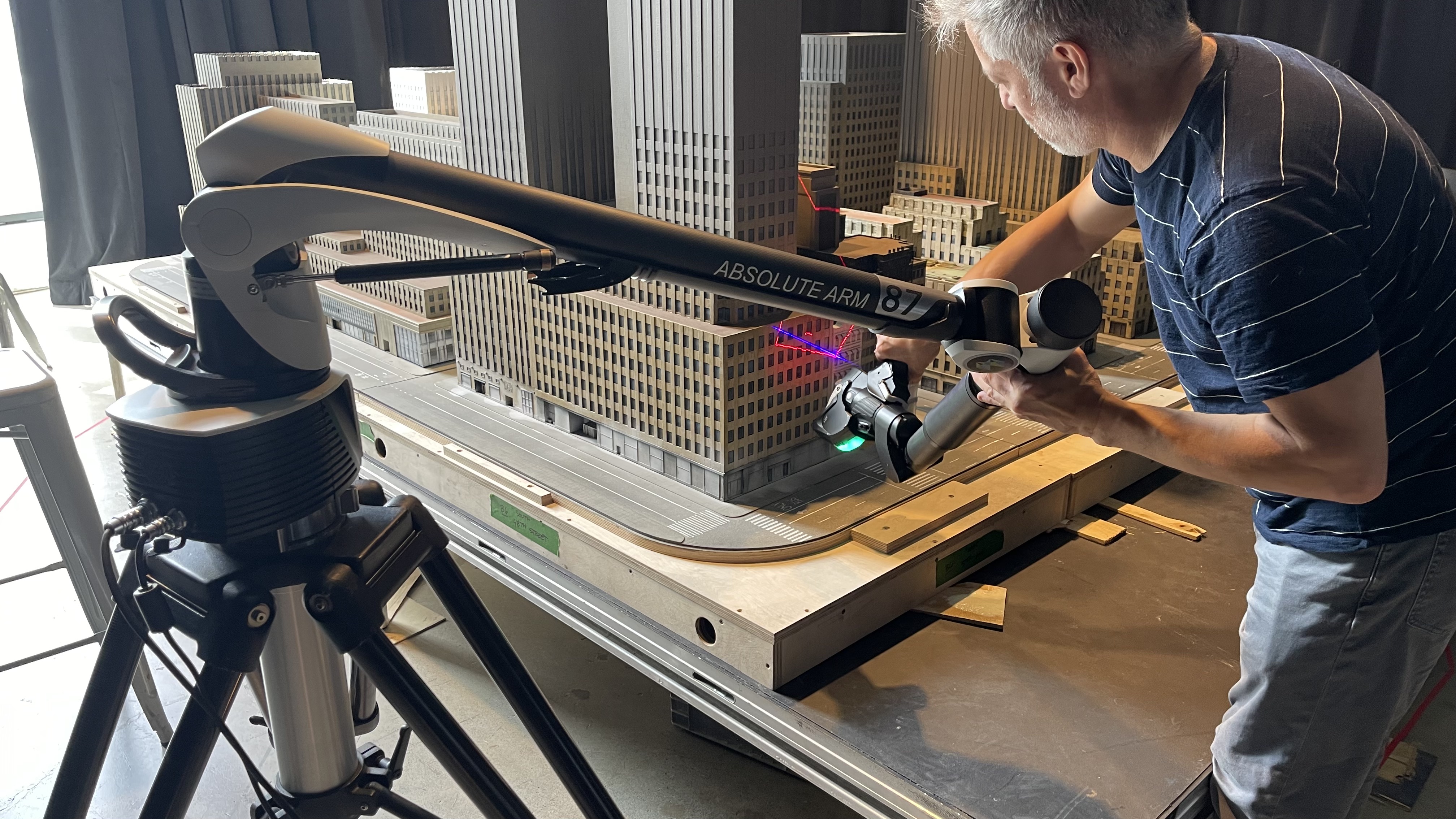
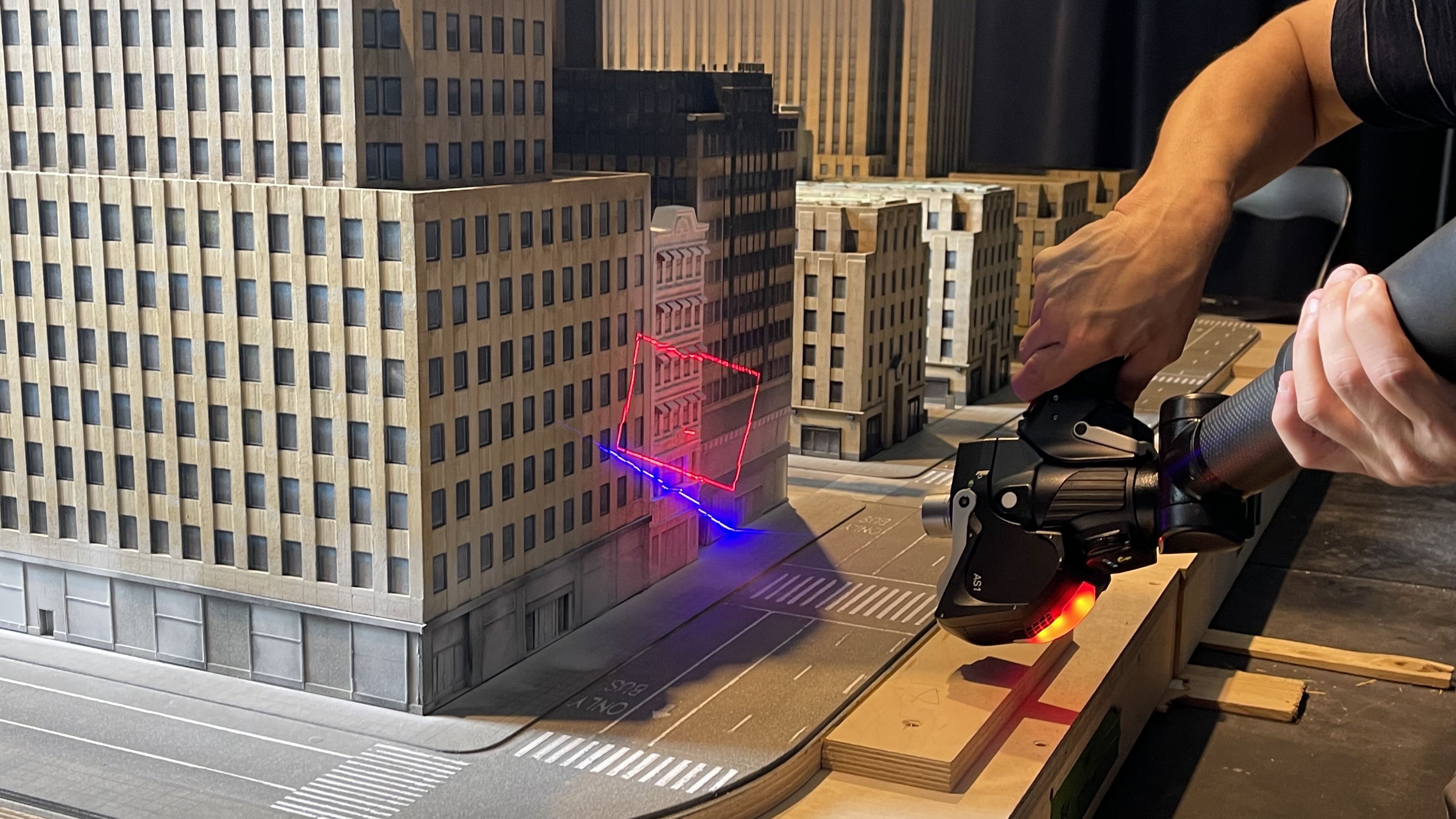
Metrological scanner/articulated or portable arm
High precision tool for small to medium sized objects or surfaces.
Advantages: micrometric precision.
Uses: objects, architectural ornaments, sculptures and other artifacts, industrial assembly.
The raw data obtained by reality capture gives us the possibility to analyze the deviation between the designed and the built, whether at the scale of an architectural model for an exhibition and projection project, immersive experiences or augmented reality projects as well as for architectural projects.
Of course, reality capture makes it possible to create digital twins that are useful for a variety of purposes. Finally, the data processed can be used for a variety of purposes and we adapt to your requirements and needs.
We are at your service!
Emma Atman
State-of-the-art technologies to capture the world accurately
LIDAR technologies, photogrammetry, and metrological scanners offer complementary solutions for creating reliable and highly accurate digital twins. From surveying buildings to documenting objects, sculptures, or artifacts, these tools provide accurate measurements, detailed 3D models, and a complete understanding of surfaces, whether they are large structures or small, complex elements.

LIDAR (Light Detection and Ranging)
Uses a laser beam to measure the distance between the sensor and the surfaces.
Advantages: high precision, large range, speed of acquisition
Uses: buildings, architectural projects, topography (land)

Photogrammetry
Create a digital twin from photos taken from various angles, rotating around the object with a certain tolerance for juxtaposition of elements that allow for reliable three-dimensional assembly.
Advantages: good complementarity with LIDAR, but this can generate some imperfections unlike metrology, which is a precision technology
Uses: objects, architectural ornaments, sculptures, and other artifacts

Metrological scanner/articulated or portable arm
High precision tool for small to medium sized objects or surfaces.
Advantages: micrometric precision
Uses: objects, architectural ornaments, sculptures and other artifacts, industrial assembly
Let's explore the possible because the path opens by walking!
Emma Atman
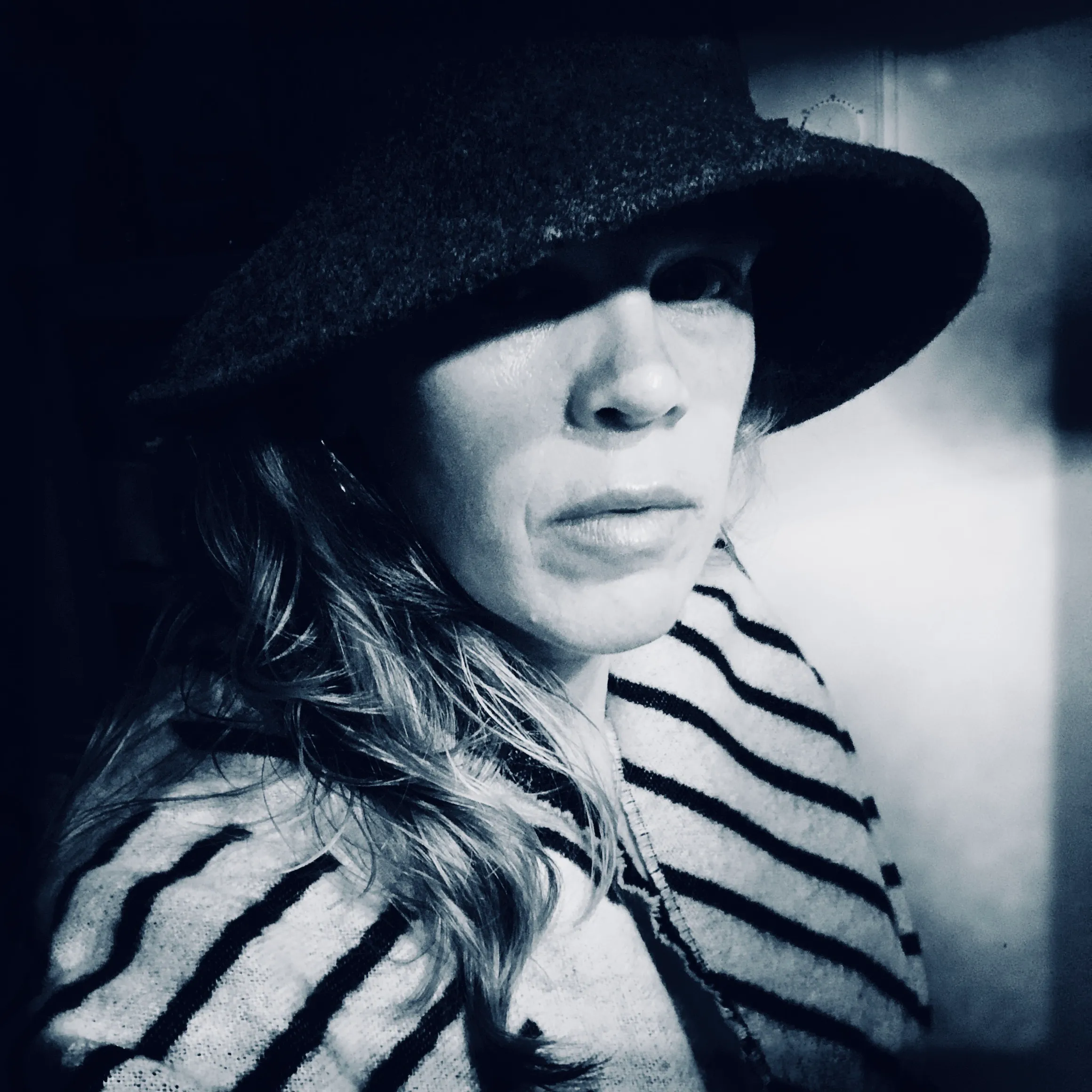
What drives us? Who are we?
In the beginning was the word… the spark, the breath that gives life and inspires. The creation of the Atelier became a natural step. It was in a spirit of iteration, discovery, and exploration that the development of this workshop project began. In 2018, while working as a set designer for CBS Studio, it became clear that we needed to integrate in order to produce accurate three-dimensional scans, especially in situations where the environment is organic, curved, complex, or heritage-related, such as in thecase of an airplane, an abbey, or a chapel, for example.
Emma Atman, the founder… who am I?
I am a woman of projects, both an explorer and avisionary. Co-creating, collaborating, uniting, communicating, learning,understanding, sharing, and developing promising projects… that is what drives me.
When I was a child, I created worlds!
I designed living spaces. I believed that everyone possessed this imagination and his ability to visualize space. I know today that this is not the case, and that drawing, just like models, are essential communication tools. Creating models, whether virtual or physical, help people visualize upcoming projects, just as a freehand sketch helps convey the concept and the central idea. However, models and renderings go further: they literally draw us into the project. We can experience the space from the inside! Volume, light, materials, textures, and colors help us do this.
For designers, it is a fantastic communication tool. At the design stage, it is also a space for play, reflection, and experimentation. The model becomes a tool for exploring ideas: it is as much a conceptual and creative journey as it is a spatial one.
Exploring new horizons through technology and digital innovation—from reality capture to 3D printing, through the creation of digital twins, augmented reality, and immersive experiences—has become essential.
This is the path I have chosen to take.
These are innovative, fascinating technologies with particularly impressive development potential, evolving at anexponential rate ! My journey comes to life and takes shape through myexperiences. It combines technology and digital innovation with the worlds ofthe arts, culture, design, and architecture. The common thread linking each of my steps, each of my decisions, is a thirst for exploration, deeper understanding, and sharing. A journey of observation and dialogue. The fabric of this journey is built and woven through a deep passion for heritage,history, design, architecture, and creation. Co-creation and the development of promising projects!
As the founder and president of XYZ Atelier, I am proud of the journey we have taken. I know that many more challenges and collaborations will shape the Atelier’s identity! We are ready.
Let’s join forces on shared projects!
Emma Atman
Collaborators
At XYZ Atelier, projects take shape through collaborations. Each mandate brings together designers, architects, artists, artists, technicians and designers around the same objective: to transform data, ideas and spaces into sensitive and concrete experiences. The workshop is built in a spirit of co-creation, where expertise complements each other to bring out innovative solutions. More than just a production process, collaboration becomes an essential creative driver that gives meaning to projects and shapes the very identity of the workshop.

Eric Liard,
Hexagon MI Canada
A long-time partner and collaborator, Éric has contributed significantly to the development of expertise at XYZ Atelier. With more than 30 years of experience in manufacturing and metrology at Hexagon Manufacturing Intelligence, he accompanies the workshop in the integration of high-precision 3D scanning and measurement methods. Through his technical perspective and his in-depth understanding of manufacturing processes, from the machined part to the artistic reproduction, he contributes to the success and development of the company. His expertise and generosity in sharing knowledge allowed the workshop to refine its methods and broaden its possibilities of realization. In particular on the Rockefeller Center project, for the metrology-grade digitizationof the architectural model, which was created for the reception gallery at the Top of the Rock, New York.
He is a territory manager at Hexagon Manufacturing Intelligence, a manufacturer and leader in metrology systems and high-precision 3D scanning solutions. It is committed to providing value, strategies, and solutions that improve manufacturing processes for its customers. With expertise in dimensional metrology, high-precision 3D scanning, manufacturing, CNC programming, tooling, and various software applications, Eric is ideally equipped to support customers in various market segments. Her educational background includes studies in business administration, computer science, tool manufacturing, and entrepreneurship, reflecting her passion for lifelong learning. Eric is deeply interested in understanding creative processes of all kinds, from high-precision machined parts to the assembly of airplanes, automobiles and ships to artistic reproduction or reverse engineering, demonstrating his inquisitive approach to his field.


François Paré,
Account Manager - CANADA
Faro Creaform Ametek
Mr. Francois Pare, a mechanical engineer by training, joined Creaform in 2009 as a CAD instructor. His first term of 18 months was in the Dassault Systèmes offices dedicated to the training of Boeing employees in Seattle (USA).
After which, he changed positions to join the 'CREAFORM Metrology Services' team as an application specialist. Over the following years, he participated in numerous 3D scanning projects around the world for both reverse engineering and inspection & metrology needs. With this experience and the training he gave to hundreds of users, he became an expert on all CREAFORM 3D technologies and its partners. After almost five years of working in this way in close proximity with clients, in 2016, he became account manager for Canada with a focus on Ontario, Quebec and the Maritimes. Francois Pare is thus soon accumulating 17 years of experience in various applications based on 3D scanning. His experience allows him to properly support and support Creaform customers in their 3D innovation projects.

Alexandre Aurino Lins-d’Auteuil
Bachelor of Communication (Media Creations — Interactive Media)
He currently collaborates as a research assistant with Nicolas Reaves at NXI Gestatio where he uses his engineering spirit as well as his artistic sensitivity.
He designs, manufactures and optimizes manufacturing processes, and makes 3D models in Rhino for research-creation projects. He develops and manufactures prototypes and has a great deal of experience in 3D printing acquired at Fablab. Among others, he works with Fusion 360, SolidWorks, SolidWorks, Blender, Blender, NomadSculpt in addition to Rhino
He also participates in the installation of works of art at various festivals and offers technical support during exhibitions.
Contact us
You have a project for which you would like to use our services and you have questions. Contact us!